2026-08-28 · Marcus Reyes
How Hard Water From the Colorado River Damages Pipes in Las Vegas Homes
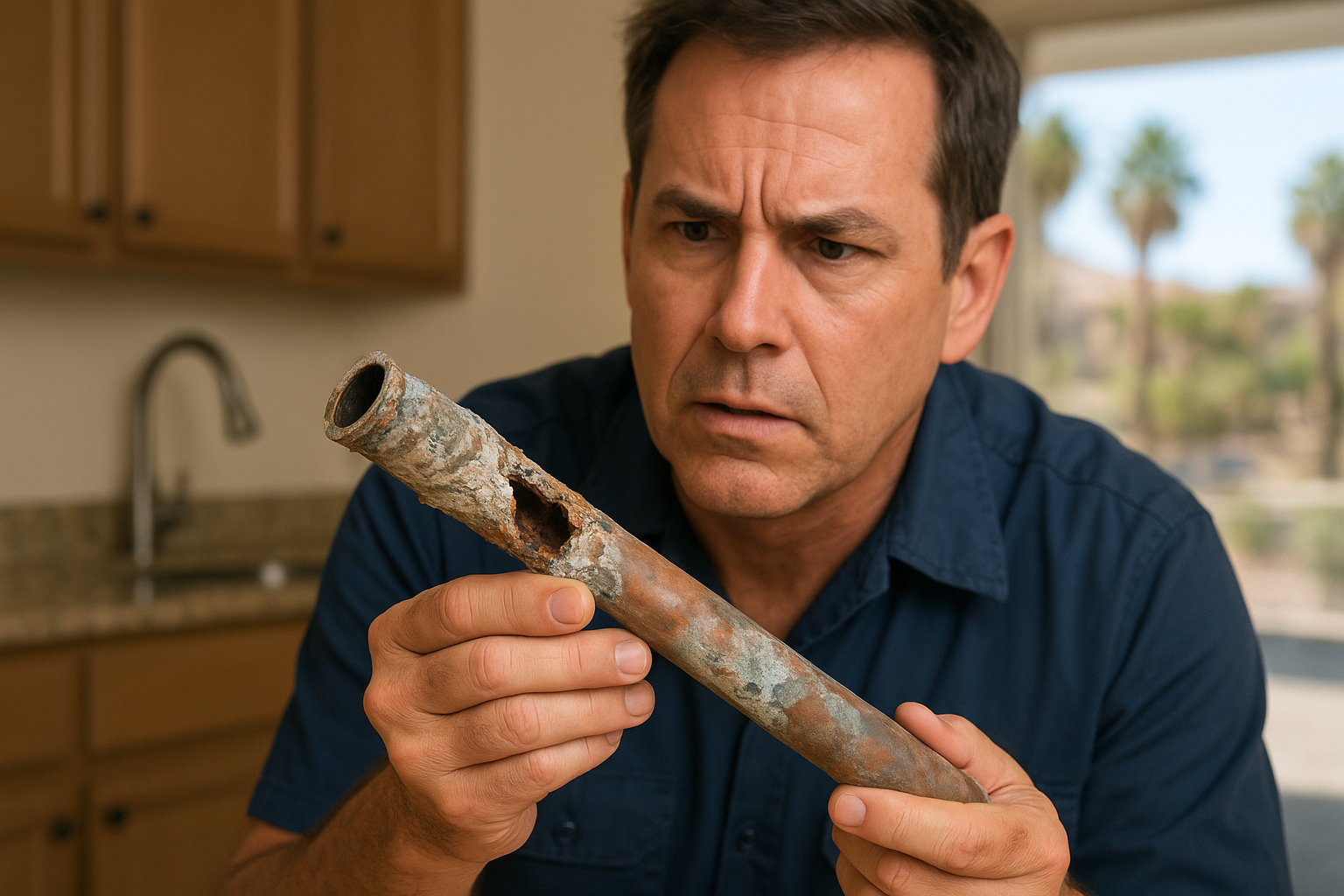
Hard water drawn from the Colorado River deposits calcium and magnesium scale inside Las Vegas pipes, cutting interior diameter by up to half within 12–18 years and forcing homeowners in neighborhoods such as Summerlin and Sunrise Manor to face reduced pressure and eventual leaks.
Scale Buildup from Colorado River Minerals
Water supplied to Clark County carries 250–350 ppm of dissolved solids that precipitate as scale when temperatures rise above 110 degrees in summer. The deposits first appear as a white film on aerators in homes built before 1980 in Downtown Las Vegas and the Arts District, then thicken inside galvanized lines until flow drops from 8 gallons per minute to 3 or less. In Centennial Hills and Lone Mountain, where many 1990s tract homes still have original copper, the scale narrows bends and elbows fastest because turbulence increases deposition. Residents notice longer waits for hot water and higher water-heater energy use long before leaks appear. Regular vinegar soaks on fixtures provide only temporary relief; once scale coats the inside of supply lines, chemical cleaning cannot restore full capacity.
Corrosion Accelerated by Hard Water and Desert Heat
Scale traps moisture against pipe walls and creates galvanic cells that eat through galvanized steel at 0.005–0.008 inches per year in Las Vegas summers. Homes in Spring Valley and Enterprise with original 1970s plumbing often develop pinhole leaks at joints within 25 years, while nearby copper lines suffer from dezincification when water sits in lines during 115-degree days. The hot desert climate evaporates standing water faster, concentrating minerals and speeding the cycle. Slab leaks become common under concrete foundations in these older tracts because soil expansion from minor moisture changes stresses already thinned pipes. Monitoring water pressure at multiple fixtures helps catch early narrowing before a sudden failure floods a finished basement or garage.
Neighborhood Differences in Pipe Damage Rates
Older stock in Downtown Las Vegas and the Arts District shows the fastest deterioration because homes from the 1960s and 1970s often contain galvanized pipe that reacts quickly with Colorado River minerals. Newer subdivisions in Summerlin and Centennial Hills use copper or early PEX, yet still develop scale on water-heater dip tubes and manifold connections within 15 years. Spring Valley and Sunrise Manor sit on slightly harder soil that retains heat longer, keeping pipe temperatures elevated even after sunset and extending the daily window for mineral precipitation. Homeowners in these areas who track monthly water bills notice gradual increases of 15–20 percent as scale forces pumps and heaters to work harder. Checking visible supply lines under sinks every six months reveals the first white rings that signal deeper restrictions.
When Repiping Becomes the Practical Fix
Once flow tests show less than 4 gallons per minute at any fixture or multiple pinhole repairs have occurred, whole-house repipe restores capacity more reliably than repeated spot fixes. PEX repipe handles the thermal expansion common in Las Vegas summers without the joint failures seen in older copper. Properties built before 1980 in Henderson face similar issues; the linked article details cost drivers for those homes. During extreme heat spikes above 110 degrees, protecting pipes becomes harder, as explained in the post on summer heat. Replacing lines before a slab leak develops avoids the $8,000–$15,000 range of under-slab repairs typical in Enterprise and Spring Valley. The work usually takes 3–5 days and leaves walls and ceilings accessible for inspection afterward.